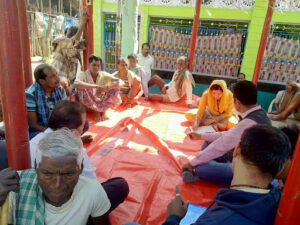
Establishing a Concurrent Monitoring, Evaluation and Learning System
The world’s premier rice research organisation is dedicated to reducing poverty and hunger through rice science.
The world’s premier rice research organisation is dedicated to reducing poverty and hunger through rice science.
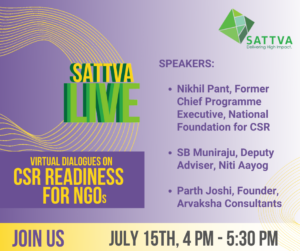
Sattva hosted a webinar to help nonprofits navigate CSR compliance requirements, enabling NGOs to potentially leverage CSR engagement to create impact.

The World Health Organization (WHO) recognises the need for integrating mental health into primary healthcare. Community-based models, focusing on active community engagement have proven effective for delivering comprehensive care, and bridging care and access gaps in the service delivery mechanism. The implementation of such models, however, is impeded by three
Government andMulti-laterals We work with central, state and district government bodies offering strategic advisory services for their priority programmes, programme design and management support. Share States and UTs 0 central government bodies 0 + state government bodies 0 + India is among the 193 signatories of the UN Sustainable Development
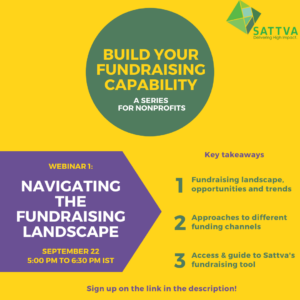
It is essential for non-profits to familiarise themselves with the overall funding landscape as well as develop strategies to adapt to these changes.
Episode Transcript Podcast Introduction Introduction: Welcome to the podcast ‘CSR Partnerships for Innovation’. I am Chintan Vaishnav, Mission Director for Atal Innovation Mission at the Niti Aayog, and we are delighted to unveil this podcast series in collaboration with Sattva Consulting, hosted by their dynamic and hands-on CEO Srikrishna Sridhar

Scroll down for the executive summary and to access the full report, click “Download the report” on the right or at the end of the summary, based on your web browser.
Sattva brought together funding agencies, not-for-profits, subject matter experts, advisors to government, and private sector leaders actively involved in the digital health ecosystem and primary healthcare to discuss the opportunities presented by the Ayushman Bharat Digital Mission (ABDM) to strengthen primary healthcare in the country.The discussion focused on key challenges

A recent solution that has shown promise in improving the type of work and market opportunities available to women is the advent of e-commerce.

Digital technology is emerging as a key enabler of healthcare delivery in India. Advanced technology such as AI and Blockchain are being deployed across a wide range of applications from patient management and care delivery to administration. Increasingly, digit al interventions are being linked to key healthcare outcomes such as