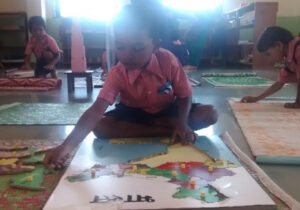
Education: Community engagement is critical to address the quality conundrum
Over the last two months, I have had the opportunity to meet and talk to a wide range of people and organisations focused on education.
Over the last two months, I have had the opportunity to meet and talk to a wide range of people and organisations focused on education.
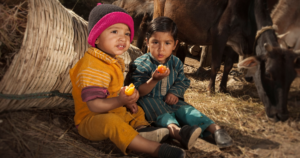
Malnutrition in India is a multifaceted issue, encompassing both undernutrition and overnutrition. According to the State of Food Security and Nutrition in the World 2022 Report, around 224.3 million Indians are undernourished. Inadequate access to diverse and healthy diets causes micronutrient deficiencies, especially in children and women. Nutrition has gained

Explore our State of CSR in India Report 2024. As we mark the 10 year milestone, since the CSR law was mandated in India, CSR is recognised as a credible source of development finance. Where are these funds being deployed? Who are the funders? What do the trends look like?

This is the first blog in a two-part blog series on a program developed by the Michael & Susan Dell Foundation and Sattva Consulting to expand English-language skills to address employment challenges in India.
Non-profitOrganisations We help non-profit organisations execute their missions effectively through advisory, capability building and programme enablement support. Share NGOs engaged 0 + NGOs enabled 0 + countries reached 0 From our inception, we have always had a strong emphasis on working with non-profit leaders to achieve their aspirational visions effectively,
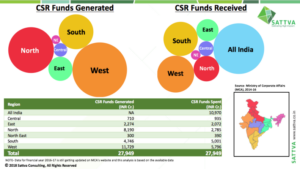
Continuing our series on region-wise analysis of CSR funds in India (you can access the previous post here),

Amongst the most crucial causes of India’s agrarian crisis and subsequent economic slowdown is the structural inability of its small and marginal farmers to access small-sized, affordable and timely credit. The Open Credit Enablement Network (OCEN), an upcoming digital protocol, displays immense potential in challenging this situation, by shifting how
Scroll down for the introductory note. To access the full report, click “Download the report” on the right or at the end of the summary, based on your web browser.

A social development incubator had developed a programme, funded by a large investment bank, to improve gender diversity ratios and quality of candidates entering the retail sector.

Access to finance remains an issue for many inclusive businesses seeking to expand their operations or deepen their impact. Businesses face multiple challenges including the cost of capital and the scarce availability of affordable finance beyond the early stage. Investment readiness is also an issue, with companies facing difficulties in